

If you’ve ever finished a workout feeling exhausted, sore, and slightly betrayed by your own body—welcome, you’re human.
Now imagine finishing a movement practice feeling lighter, calmer, and more connected, not like you just survived a fitness boot camp. That’s where Yogic Movement Practice quietly enters the room, stretches, and says, “Relax. We’re not here to fight the body.”
So what exactly is yogic movement practice? And how is it different from regular exercise that loves counting reps more than listening to your joints?
Let’s break it down—gently, of course.
What Is Yogic Movement Practice?
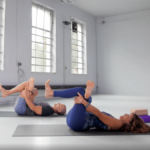
Yogic Movement Practice is a slow, conscious, breath-led way of moving the body with awareness, not aggression.
Instead of forcing shapes, chasing flexibility, or pushing limits, yogic movement focuses on:
- How you move, not how deep you go
- Breath guiding movement, not momentum
- Sensation and feedback, not performance
Think of it as movement with listening, not movement with punishment.
It comes from yogic principles where the body is not a machine to be “fixed” but a living system to be understood.
So… Is Yogic Movement the Same as Yoga Asanas?
Not exactly.
Traditional yoga asanas often focus on holding postures. Yogic movement focuses on moving in and out of postures slowly and intelligently.
Instead of:
- Hold. Strain. Breathe through the pain.
You get:
- Enter. Feel. Adjust. Exit. Rest.
It’s especially useful for:
- Beginners
- Stiff bodies
- People recovering from stress, injury, or burnout
- Anyone tired of being yelled at by fitness culture
How Is Yogic Movement Different from Exercise?
Let’s put them side by side—no competition, just clarity.
1. Goal: Performance vs Awareness
Exercise says:
“Do more. Go harder. Burn calories.”
Yogic movement says:
“Move better. Breathe fully. Stay present.”
The goal isn’t exhaustion—it’s coordination between breath, mind, and body.
2. Pace: Fast vs Slow
Exercise often rewards speed and intensity.
Yogic movement rewards slowness.
Why?
Because slow movement:
- Improves joint awareness
- Reduces injury risk
- Rebuilds trust with the body
You’re not late. You’re intentional.
3. Relationship with the Body
Exercise sometimes treats the body like:
“You will obey.”
Yogic movement treats the body like:
“Let’s have a conversation.”
Pain is not ignored. Fatigue is respected. Rest is allowed—without guilt.
4. Breath: Optional vs Essential
In most workouts, breath is an afterthought.
In yogic movement:
- Breath leads
- Movement follows
If the breath becomes strained, the movement slows or stops. Simple rule.
Who Is Yogic Movement Practice For?
Short answer: almost everyone.
Especially:
- People starting yoga for the first time
- Those returning after injury or long breaks
- Anyone feeling disconnected from their body
- Overthinkers who need to feel, not analyze
If you can breathe, you can practice yogic movement.
What Yogic Movement Is Not
Let’s clear up some confusion.
It is not:
- A workout replacement (it complements, not competes)
- A flexibility contest
- A spiritual performance
- Something you “win” at
It’s a foundation practice—quiet, powerful, and often underestimated.
Why Start with Yogic Movement Practice?
Because it:
- Builds body awareness before complexity
- Prepares joints and nervous system for deeper yoga
- Reduces fear of movement
- Creates safety—physically and mentally
In simple words:
It teaches you how to move before asking you to move more.
Final Thoughts
Yogic Movement Practice is not about doing less—it’s about doing what’s appropriate.
In a world obsessed with speed, results, and extremes, this practice gently reminds you:
Your body is not a problem to solve.
It’s a relationship to nurture.
And once that relationship improves, everything else—strength, flexibility, stability—follows naturally.
No force required.